

The white sturgeon
The possibility of goodness in times of war.

Every morning, the White Sturgeon gleams gold above the stained dining room table. It hovers. It has learned there is always time for curiosity. The White Sturgeon watches you, curled up in a grey, fleecy blanket, desperately trying to wake up and name your shoulds: should be ahead on emails; should relax; should listen to interviews and prep better; should stop to breathe; should call your grandmother; should engage classmates socially; should enjoy this day.
A pigeon slices the dark wall of storm outside. You have been reading unthinkable, real stories of war. A ravine in Ethiopia. Children. How do you sort desires, after that? You envy the sturgeon’s ability to navigate troubled waters past the moment of sight. You do not envy the prize they are — that memory of the fish farm manager speaking with a wistful sigh about hooking a sturgeon and reeling it up from the depths, of holding a myth in his hands. The irony — as he spoke, thousands of fish had swarmed at his feet.
You’ve been wondering what it is in humans that sends them to war. Your mother made you memorize the answer as a kid and you chanted it before breakfast: What causes fights and quarrels among you? You want what you can’t have . . .
The sturgeon slowly blinks. The other night, you dreamed someone put a task into your Google document and it was running water. You tried to re-size it and the water poured out of the screen onto your laptop. In the dream you rushed for a towel. To save what?
Wherever a human is, the physicist said at the panel, there is still hope. Yesterday, when you added new, dry soil into a pot, the soil handed the moisture up. Today there are wet spots blooming around the green onions.
For months, when it is time for silent confession, you have been confessing despair: the heavy reluctance to believe in the possibility of goodness. The priest announces forgiveness.
Hope swims by. That mythical river-creature below the silt. Sorely hunted. Gazing at you, gleaming gold above the stained dining room table. •
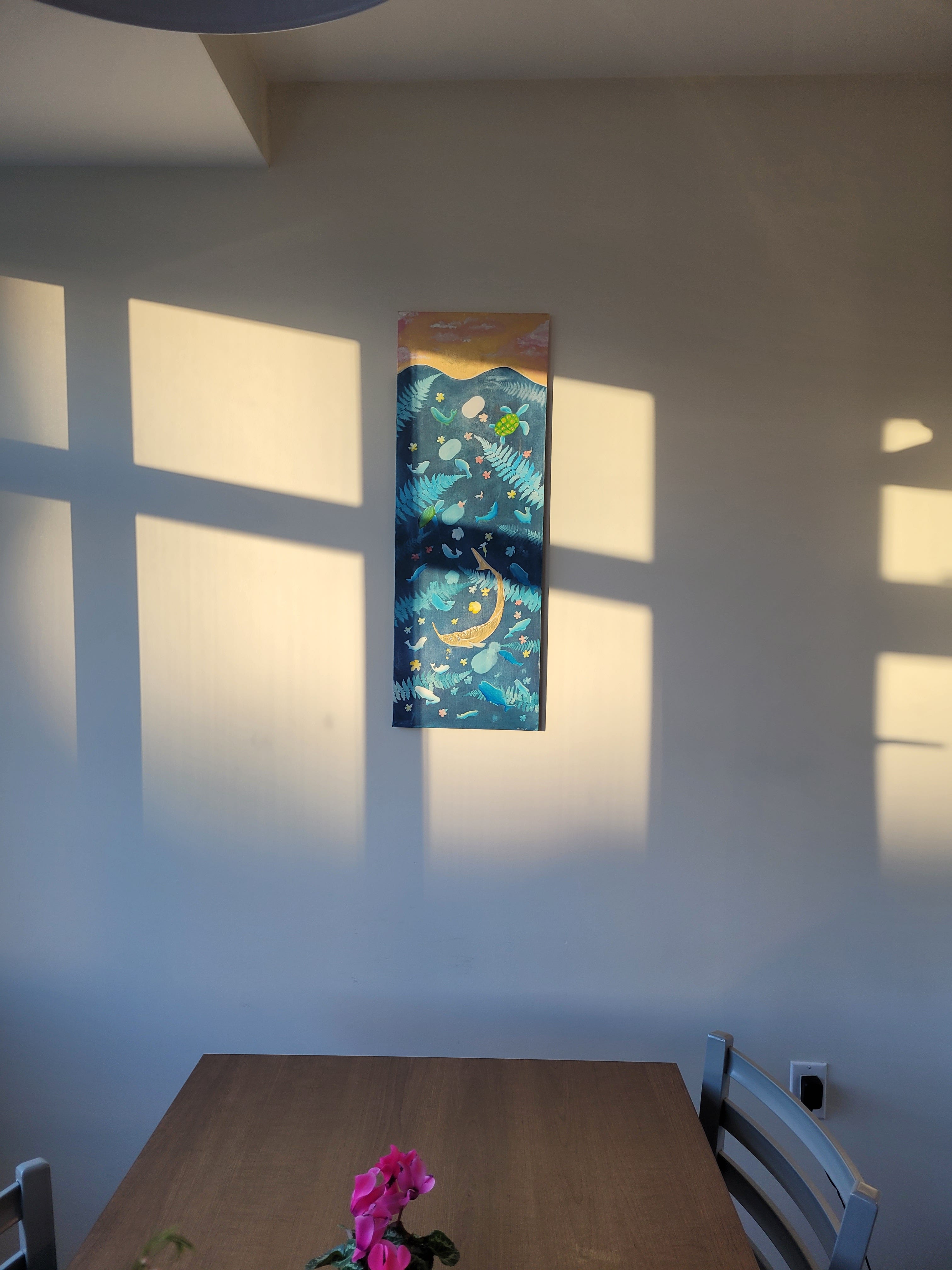
I have not been writing nearly as much as new drafts as I hoped to, this summer. But this week, I’ll be taking a few days away from technology. I’ve been asked to create art to the theme of “help my uncertainty” and the prompt reminded me of this collection of notes I jotted down in the Spring; I hope you enjoy it.
Also, on my way out the door to the trees, I learned that Pin Bones, my debut poetry collection, is available for pre-order! If you love fish, or want to, or are actually afraid of fish (me!) I’d suggest snagging one.
Pin Bones will be printed next April, so it’s delayed gratification, but pre-orders help authors immensely. For today and tomorrow (June 25 - 26) Barnes&Noble members get 25-35% off pre-orders with code: PREORDER25.
If you’re curious, you can see the pretty book here — including a preview of the first few pages (which include TWO full-page pieces of art!). Gaahh!
In more serious news — two weeks ago, I mentioned that I was doing interviews with community leaders in Bunia, DRC, about their response to the Ebola epidemic. Two of three stories from those interviews are now available online, if you’re interested: a story on the initial outbreak and on a Canadian pilot’s part in the humanitarian response. In a few weeks the main story, about what it takes to build trust in an epidemic, will be available to read.
Take care,
Maaike
Your writing instantly takes me out of the computer and into the world
I am a plebian when it comes to this meditation. All I can think of is the 'sport fishing' industry that catches ancient sturgeon for fun and then releases them to age a day or year more and get caught again. I say this as a fisher-human who does catch trout and eat them and more often uses barbless hooks and releases them unharmed but probably traumatized. But sturgeon! Elders of the fish world. (So I 'missed the point' of your writing. I hope that's ok.)